

Why clear compliance support helps
Records you can keep
Waste transfer notes give you a clear audit trail for collected used oil.
Safer storage between visits
Blue barrels help keep waste oil segregated, sealed and ready for uplift.
Collections that fit the site
Pickup schedules are matched to your oil output and storage capacity.
Keep waste oil handling compliant and clear
Managing used cooking oil properly is not just about keeping a kitchen tidy. It is also about clear records, safe storage and lawful transfer. At The Cooking Oil Guys Ltd, we help hospitality businesses in Colchester handle waste oil in a compliant way by collecting it for recycling, supplying blue barrels for storage and providing waste transfer notes at pickup. That gives pubs and restaurants a clear record of where the oil went and supports the duty of care they need to maintain around waste movements.
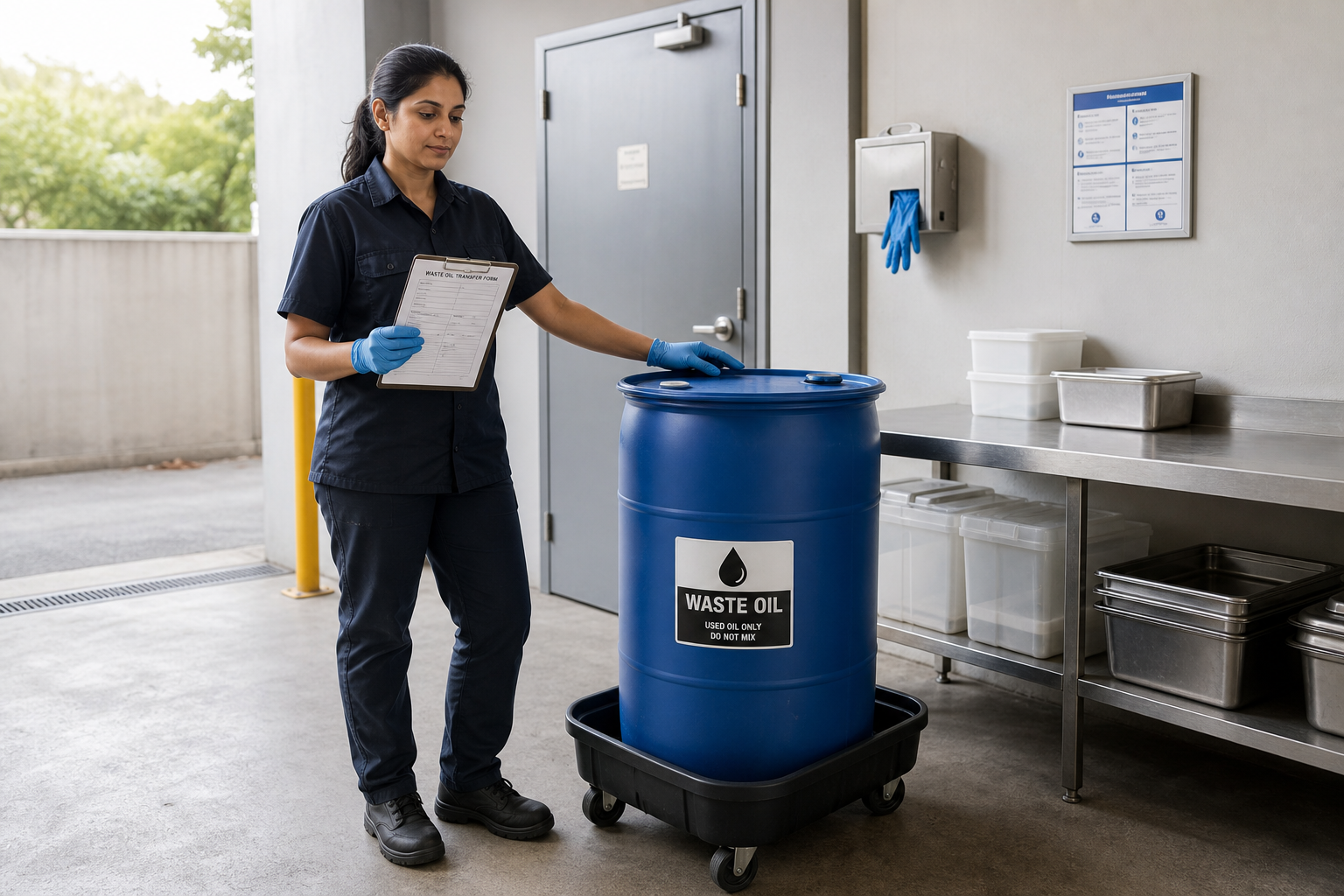
Simple steps that support daily compliance
Day to day compliance becomes easier when the practical steps are simple. With The Cooking Oil Guys Ltd, collections can be scheduled around your usage, and we advise that used oil stays in the supplied container, lids remain secure and food waste or water does not contaminate the barrel. We record the key transfer details at collection, including site information, date and waste description, so you have paperwork ready for internal checks or inspections. It is a straightforward way to keep waste oil handling organised without extra hassle.
Frequently asked questions
What paperwork supports waste oil compliance?
Waste transfer notes are the key paperwork provided with collections. They help create a record of the waste transfer and support your duty of care records, making it easier to show how used oil has been moved from your site for recycling.
How should we store used oil between collections?
Used oil should be kept in the supplied container with the lid secure and the contents free from food waste or water. Keeping the oil segregated and avoiding overfilling helps reduce spills and supports a smoother collection and recycling process.
What details appear on the transfer notes?
The paperwork is there to record the waste movement and can include the site details, collection date, waste description and quantity or container information recorded at collection. That gives you a practical record for routine checks or inspections.